

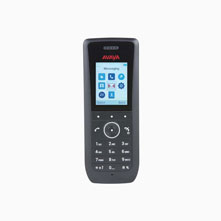
Quick Product Information
Avaya
3735
Enterprise DECT wireless handset
Standard and Alarm versions
Mobile voice, messaging, alerts, and team coordination
Avaya Aura, Avaya IP Office, and approved compatible platforms; deployment dependent
Contact FourTeck for current options and lead-time guidance
Selection, compatibility review, accessories, quotation, delivery, and warranty guidance
Product Overview
The Avaya 3735 is built for workplaces where employees cannot remain beside a desk phone but still need access to business calling and operational messages. It works as an endpoint within a compatible DECT deployment rather than as a standalone consumer cordless telephone. That distinction is important for procurement teams: the handset depends on the correct wireless infrastructure, system configuration, supported software level, licensing where applicable, and suitable charging accessories. When those pieces are aligned, it gives mobile staff a familiar keypad device that can carry voice calls, receive messages, access phonebooks, and support workflow-oriented communication across covered areas.
Its design is especially relevant to organizations that combine mobility with structured communications. Hospitals may use it for staff calling and message distribution. Retail operations can keep supervisors reachable across sales floors and stock areas. Corporate campuses can equip facilities or security personnel who move between buildings. Warehouses and service environments can give team leads a dependable handset without forcing them to rely on personal mobile phones. The unit supports Bluetooth Hands-Free Profile 1.6, a standard 3.5 mm headset connection, a DSP-assisted duplex loudspeaker, color-coded messaging, and centralized management capabilities. These functions help the handset fit into formal business communication processes instead of operating as an isolated calling device.
The product is offered in Standard and Alarm variants. Both support core telephony, advanced messaging, DECT location at base-station level, Bluetooth, and centralized management. The Alarm version adds a push-button alarm capability. This difference must be confirmed at the part-number level because an organization requiring duress signaling or a dedicated alarm action should not assume every 3735 unit provides it. Alarm behavior also depends on how the surrounding system is designed and configured. A handset alone does not create a complete staff-safety workflow; it must be integrated with the relevant messaging, location, response, and escalation process.
For day-to-day use, the 2.0-inch color TFT display offers white LED backlighting and 262,000 colors, helping users view menus and messages in lower-light areas. The handset supports local, company, and central phonebook functions, configurable profiles, a vibration alert, multiple ring settings, call lists, and pre-programmed messages. Battery specifications provide up to 20 hours of talk time and up to 235 hours of standby time with the stated screensaver condition, while charging is specified at under four hours. Actual operating time can vary with Bluetooth use, radio conditions, display activity, messaging frequency, battery age, and configuration.
FourTeck supports Kuwait buyers by turning these product details into a practical bill of materials. The review can cover handset variant, existing Avaya environment, DECT base-station coverage, software compatibility, user licenses, chargers, spare batteries, belt clips, headsets, programming needs, and project quantity. This approach helps reduce ordering mistakes and makes the quotation more useful for technical teams, procurement departments, and business owners planning a replacement or a wider mobility rollout.
Key Business Benefits
Mobility Without Losing the Business Extension
Employees can remain connected to the organization’s supported telephony environment while moving through covered work areas. This helps reduce missed calls, repeated paging, and delays caused when a supervisor, nurse, technician, or facilities employee is away from a fixed desk. The value is not simply cordless calling; it is controlled mobility within the company’s communication architecture.
Voice and Messaging in One Device
Advanced and interactive messaging can support more structured communication than voice alone. Staff can receive information that is easier to review, prioritize, and act on during busy shifts. Color-coded messages, pre-programmed responses, and message storage are useful where operational instructions, service requests, or notifications need to reach mobile users without relying entirely on verbal calls.
Long Shift Readiness
The specified talk and standby times support organizations that run extended working hours, rotating shifts, or mobile operations. A suitable charging routine, healthy batteries, and spare-power planning can reduce interruptions. For larger fleets, standardized charging locations and battery replacement procedures make the devices easier to manage over their service life.
Centralized Administration
Centralized management and easy registration can simplify fleet administration when the supporting platform is correctly designed. IT teams can apply a more consistent approach to user profiles, software, phonebooks, and device settings instead of treating every handset as an independent endpoint. This matters for multi-department deployments where consistency and controlled changes reduce support effort.
Flexible Wearing and Audio Options
Bluetooth HFP support, the 3.5 mm headset connector, speakerphone, vibration, adjustable earpiece level, and adjustable ring level give users choices for different roles and noise conditions. A retail manager may prefer a lightweight Bluetooth headset, while a maintenance worker may use the handset directly. Accessory compatibility should still be verified before bulk purchasing.
Variant Choice for Different Risk Profiles
The Standard version serves organizations focused on telephony and professional messaging, while the Alarm version adds a push-button alarm function for designs that require it. Matching the variant to the role can control cost and avoid unnecessary features, while ensuring that higher-risk or lone-worker positions receive the capability specified by the safety and operational plan.
Product Highlights That Matter in Daily Operations
DECT voice, interactive messaging, push-to-talk call setup, and configurable profiles support coordinated mobile work.
A 2.0-inch TFT color display with white backlight supports menus and message reading in varied lighting.
Up to 20 hours of talk time and 235 hours of standby under stated conditions, with charging under four hours.
Local, company, and central phonebook functions help users find business contacts quickly.
Bluetooth HFP 1.6, 3.5 mm headset support, vibration, and duplex speakerphone suit different working styles.
Centralized management, easy registration, and user or system profiles support controlled handset fleets.
The handset also supports up to five configurable emergency numbers, a call list for received, dialed, and missed calls, selectable ring tones for contacts, color-coded messaging, and pre-programmed messages. These details can reduce the number of steps a user needs to take during a busy shift. For example, a predefined response can be quicker than typing a full message, while an emergency number can be dialed without first unlocking the keypad when the system is configured for that function.
Physical design is practical rather than oversized. The unit measures 137 x 52 x 21.5 mm and weighs approximately 113 g including the battery and excluding the clip. It carries an IP44 enclosure rating and has been tested under the referenced one-metre free-fall procedure. Buyers should interpret these specifications correctly: the device is suited to professional use and limited splash exposure, but it is not a substitute for an intrinsically safe handset or a heavily ruggedized model in hazardous, chemically aggressive, very dusty, or continuously wet environments. FourTeck can help compare a 3735 deployment with more rugged alternatives when the working conditions demand it.
Technical Specifications
| Specification | Details |
|---|---|
| Brand and model | Avaya 3735 Wireless Handset |
| Product category | Enterprise DECT handset for mobile voice and professional messaging |
| Available variants | Standard version and Alarm version; push-button alarm is provided on the Alarm variant |
| Display | 2.0-inch TFT color display, approximately 31 x 41 mm, 262K colors, white LED backlighting |
| Dimensions and weight | 137 x 52 x 21.5 mm; approximately 113 g including battery and excluding clip |
| Audio | Adjustable ring signal and earpiece levels, maximum ring signal level specified at 88 dBA at 10 cm, DSP-assisted duplex loudspeaker |
| Headset connectivity | Bluetooth Hands-Free Profile 1.6 and standard 3.5 mm headset connector |
| Telephony functions | Answer by button or auto answer, configurable ring signals, vibration, call lists, up to five configurable emergency numbers, and Basic Push To Talk call setup |
| Phonebooks | Central phonebook support, company phonebook up to 1,000 entries, local phonebook up to 250 entries; platform and configuration dependent |
| Messaging | Interactive messaging, color-coded messages, pre-programmed messages, up to 20,000 stored characters and up to 30 received or sent messages; system behavior depends on deployment |
| Security | DECT Security feature N35 encryption support as specified by the DECT Forum |
| Battery | Lithium-polymer; up to 20 hours talk time, up to 235 hours standby with stated screensaver condition, charging time under four hours |
| Environmental ratings | IP44 enclosure protection; operating temperature 0°C to 40°C; storage temperature -20°C to 60°C |
| Physical testing | Referenced free-fall test procedure includes twelve one-metre drops for the standard product |
| Platform support | Avaya Aura, Avaya IP Office, and Avaya-approved third-party platforms; compatibility depends on system release, infrastructure, licensing, and configuration |
| Management | Centralized management, easy registration, user profiles, and system profiles on supported deployments |
| Ordering note | Confirm handset part number, variant, regional radio configuration, charger, battery, clip, headset, base-station compatibility, licenses, and warranty coverage before purchase |
How to Read These Specifications
A specification table describes the handset, but it does not confirm that a particular unit will work on every Avaya system. DECT endpoints operate as part of a larger solution. Buyers should confirm the existing call-control platform, DECT server or base stations, software release, regional radio requirements, endpoint licensing, provisioning method, and feature expectations. A handset may register and make calls while advanced messaging, location, alarms, directory integration, or push-to-talk still require additional infrastructure or configuration.
Battery figures are maximum values under stated test conditions rather than guaranteed results for every shift. Bluetooth use, frequent messaging, display activity, coverage quality, repeated roaming, high audio volume, battery age, and temperature can reduce runtime. Similarly, IP44 means the enclosure offers a defined level of protection against solid objects and splashing water; it does not make the device waterproof, explosion protected, or suitable for every industrial setting. Share the operating environment with FourTeck so the recommended model reflects real working conditions.
Configuration and Buyer Guidance
Begin with the communication platform rather than the handset quantity. Identify whether the site uses Avaya IP Office, Avaya Aura, or another approved environment, then document the software level, DECT infrastructure, current handset models, base-station coverage, and any licenses assigned to wireless users. Existing 3700-series deployments may simplify planning, but compatibility still needs confirmation. A replacement handset should be checked against the exact system and provisioning method, especially when the organization expects messaging, alarms, location, or centrally managed profiles.
Who will carry it?
Define the job role, shift length, noise level, clothing or belt-clip needs, glove use, and whether the user works alone or in a team.
Which functions are essential?
Separate basic calling from interactive messaging, Bluetooth, push-to-talk, directory access, alarm actions, location, and emergency-number requirements.
What infrastructure exists?
Confirm base stations, coverage survey, server platform, licenses, firmware, network readiness, power, and management tools.
Which accessories are needed?
Review individual or rack charging, spare batteries, clips, cases, wired headsets, Bluetooth headsets, programmers, and shared-device arrangements.
The Standard versus Alarm decision deserves particular attention. A buyer who needs only professional calling and messaging may not require the Alarm variant. A lone-worker, healthcare, security, or facilities use case may need the dedicated alarm button, but the handset must be part of a complete response design. Determine who receives the alert, how location is interpreted, what happens if the user does not respond, and whether a backup communication channel exists. The handset feature is one component of the procedure, not a complete safety policy by itself.
For a project quotation, provide the required quantity, site name, current platform, installed base stations, software version if known, desired variant, accessory list, target deployment date, and delivery location. Also state whether the order is for a new installation, expansion, replacement, or phased refresh. FourTeck can use that information to recommend the most relevant option and identify questions that should be resolved before purchase approval.
Ideal Business Use Cases
Healthcare Mobility
Clinical support, ward coordination, facilities, portering, and non-clinical mobile teams can use a supported DECT handset to remain reachable without depending on a fixed extension. Messaging and alarm-capable workflows may help route operational notifications, but healthcare deployments should review coverage, infection-control procedures, alarm design, user training, and device-cleaning requirements before rollout.
Retail Floors and Stock Areas
Store managers, department supervisors, receiving staff, and stock-room teams can remain connected while moving between customer-facing and back-of-house areas. The local or company directory helps staff reach internal contacts, while vibration, headsets, and messaging provide options for busy environments where a loud ring may not always be practical.
Corporate Facilities and Campuses
Facilities coordinators, building services, security desks, event teams, reception support, and maintenance supervisors can use the handset across a well-designed coverage area. Centralized management is valuable when the organization wants consistent profiles and phonebooks across multiple users or buildings rather than manually configuring each endpoint.
Warehousing and Service Operations
Team leaders who move between loading, storage, dispatch, and service zones can receive calls and messages without carrying a personal mobile device. The IP44 rating and drop-test reference provide a degree of professional-use reassurance, although very dusty, wet, high-impact, refrigerated, or hazardous areas may require a more specialized handset.
Hotels and Guest-Service Teams
Engineering, housekeeping supervisors, duty managers, and guest-service coordinators can remain available while moving through covered property areas. Pre-programmed messages and directory access can support routine coordination. A proper radio survey is essential because guest rooms, lift cores, service corridors, concrete walls, and outdoor transitions can affect coverage.
Replacement and Fleet Refresh
Organizations already using compatible Avaya wireless infrastructure may need replacement handsets, additional users, spare units, or a planned refresh. A fleet review should check battery condition, charger compatibility, software, remaining support expectations, user roles, and whether a newer rugged model would be more appropriate for some departments.
The strongest use case is one where coverage, platform support, accessories, and operating procedures are designed together. Purchasing handsets before confirming the site radio environment can create dead zones and roaming issues. Purchasing Alarm variants without defining the response workflow can create false expectations. FourTeck can help structure the inquiry so the device, infrastructure, and business process are considered as one solution.
Avaya 3735 Voice, Messaging, and Mobile Workflow
The handset’s value comes from combining multiple communication modes in a device that employees can carry throughout a supported workplace. Voice remains the fastest option for a discussion, but not every operational event needs a full call. Interactive messages can deliver a concise instruction, status request, service notification, or alert that the user can review without interrupting a current conversation. Color coding and configurable alert behavior can help distinguish routine traffic from higher-priority information when the surrounding messaging system supports those functions.
Basic Push To Talk is implemented as a call setup service. It can support quick group-style voice coordination, but buyers should confirm how it is configured on the chosen platform and whether the required user groups, call setup, and operational procedures are available. It should not be assumed to behave exactly like a public two-way radio system. DECT coverage, system capacity, call handling, and the programmed workflow determine the practical experience.
The phonebook structure also contributes to productivity. A local directory can hold frequently used contacts, a company phonebook can provide a managed list, and a central phonebook can expose broader organizational records through the supporting system. This reduces the need for users to memorize extension numbers or carry printed lists. For a large deployment, decide who owns contact data, how changes are synchronized, and whether different departments require separate profile or directory arrangements.
In practice, the communication design should match the pace of the work. A hospital may prioritize alarms and urgent messages. A retail site may focus on supervisor calls and short stock-related notifications. A corporate facility may emphasize directory access, Bluetooth, and managed profiles. FourTeck can help buyers map those requirements to the selected variant and verify which functions need additional platform components rather than assuming every feature is active immediately after registration.
Avaya 3735 Battery, Audio, and User Experience
A mobile communication device must remain practical across the full shift. The lithium-polymer battery is specified for up to 20 hours of talk time and up to 235 hours of standby time with the stated screensaver condition, while a full charge is specified at under four hours. These figures give planners a useful baseline, but the operating policy should be built around real usage. Bluetooth headsets, frequent calls, repeated roaming, strong display activity, continuous messaging, weak radio coverage, aging cells, and high temperatures can reduce runtime.
For an individual user, an assigned desk charger may be enough. Shared-shift operations may need labeled handsets, charging racks, spare batteries, and a defined handover procedure. Larger fleets benefit from battery-age records and a replacement cycle instead of waiting for users to report poor runtime. The manufacturer’s battery information notes capacity retention after repeated charge and discharge cycles, but real replacement timing depends on operating conditions and service expectations.
Audio flexibility helps the same model serve several roles. The earpiece and ring signal offer multiple adjustment steps, the loudspeaker is DSP assisted and duplex, and vibration can alert the user where a ringtone would be disruptive. Bluetooth HFP 1.6 supports compatible wireless headsets, while the 3.5 mm connector supports suitable wired options. Before a large headset order, test the exact model for fit, microphone performance, call-control behavior, charging arrangements, and use with protective clothing.
The color display, five-way navigation control, soft keys, dedicated audio controls, and backlighting aim to keep everyday actions straightforward. User training should still cover answering methods, keypad lock, message handling, emergency numbers, profile selection, alarm behavior where fitted, battery care, and how to report coverage issues. A ten-minute orientation at handover can prevent many avoidable support calls and improve consistent use.
Avaya 3735 Security, Location, and Alarm Planning
DECT Security N35 encryption support helps protect the radio communication path when the surrounding system is configured appropriately. Security should still be treated as an end-to-end design issue. Device registration, administrator access, software maintenance, platform hardening, user permissions, lost-handset procedures, and de-registration are all part of protecting the deployment. A secure radio feature cannot compensate for weak administration or an unmanaged device inventory.
DECT location can identify the handset at base-station level. That is useful for operational awareness, but buyers should understand the accuracy model. It does not provide the same precision as a dedicated indoor real-time location system. The useful location description depends on base-station placement, site naming, coverage overlap, system integration, and how responders interpret the data. A base station labeled only with a technical code is less helpful than one mapped clearly to a floor, zone, department, or building area.
The Alarm variant adds a push-button alarm that can be configured for duress-call or alert behavior. Organizations considering this feature should define the entire response chain: who receives the event, how quickly it must be acknowledged, whether the user’s location is displayed, what escalation follows no response, and how the process is tested. The acoustic localization signal can assist in finding a handset when an alarm is active, but its usefulness depends on the environment and configuration.
For lone-worker or staff-safety use, involve the safety owner, IT team, telephony administrator, and department manager before procurement. Confirm whether a push-button event alone is sufficient or whether the operation requires man-down, no-movement, explosion-protected hardware, waterproofing, or more precise location. In some environments, a different Avaya model may be the correct choice. FourTeck can help frame the product comparison without overstating what the 3735 is designed to do.
What Buyers Should Check Before Purchase
Before requesting a quote, buyers should confirm the required configuration, usage environment, compatibility needs, warranty expectations, accessories, and delivery location. Selecting by model name alone can lead to the wrong variant, missing chargers, unsupported advanced functions, or a handset that does not match the site’s radio and call-control environment. The following checks help FourTeck prepare a more accurate recommendation and reduce avoidable changes after purchase approval.
Correct Part Number
Confirm whether the requirement is the Standard handset or the Alarm version. Ask whether the quoted unit includes a battery, clip, charger, power supply, license, or any other accessory, because bundle contents can differ.
Platform Compatibility
Provide the Avaya platform, software release, DECT server, base-station type, current handset models, and management method. Feature support can differ even when basic calling is available.
Coverage and Capacity
Check whether the site already has verified coverage in every working zone and enough system capacity for additional users. New buildings or changed layouts may require a fresh survey.
Messaging and Alarm Dependencies
State which messaging, push-to-talk, location, emergency, and alarm features are expected. Confirm the servers, licenses, integrations, and response workflows needed to deliver them.
Charging and Accessories
Decide between individual charging and shared-fleet charging. Include spare batteries, clips, protective cases, programmers, and tested wired or Bluetooth headsets in the project plan.
Operating Environment
Describe temperature, dust, moisture, impact risk, cleaning chemicals, hazardous zones, noise, and outdoor use. IP44 is not suitable for every demanding site.
Warranty and Lifecycle
Ask how warranty handling works, what documentation is required, whether batteries are treated separately, and what replacement options exist if the selected part number changes.
Quote Preparation
Share quantity, variant, site, platform, accessories, target date, deployment type, and delivery location. Mention whether installation, programming, migration, or user handover support is required.
Long-term cost is influenced by more than the handset price. Include charger infrastructure, spare units, battery replacement, management time, licensing, coverage additions, accessories, user training, and support expectations. For bulk orders, consider a small validation batch or pilot in the actual work environment before the full rollout. A pilot can reveal headset preferences, coverage gaps, message behavior, alarm workflow issues, and accessory needs while changes are still easy to make.
Kuwait Availability and Service Support
FourTeck supports inquiries for the Avaya 3735 Wireless Handset across Kuwait City and the wider Kuwait market. Assistance can include model and part-number review, Standard or Alarm variant selection, compatibility questions, accessory planning, quantity-based quotation, delivery coordination, and warranty guidance. Availability may vary according to supplier status, selected part number, order volume, and the accessories required for the deployment.
For existing Avaya customers, share the current system details so the inquiry can be reviewed as a replacement or expansion rather than as a generic handset purchase. For a new mobility project, include floor plans or coverage information, intended user groups, message and alarm expectations, and the number of simultaneous users. These details help identify whether the request involves handsets only or also needs base stations, servers, licenses, charging equipment, professional services, or a more rugged model.
FourTeck does not rely on unconfirmed stock statements. The sales team can check current options at the time of inquiry and coordinate the next step based on the buyer’s technical and commercial requirements. Warranty terms, delivery arrangements, and service scope should be confirmed on the quotation because they may differ by source, configuration, and order.
Business Coverage Across Kuwait
Organizations in Kuwait City, Hawalli, Salmiya, Farwaniya, Ahmadi, Jahra, Salwa, Fahaheel, Mangaf, Shuwaikh, Al Rai, and other Kuwait locations can contact FourTeck for product selection, configuration review, quotation, and delivery coordination. The inquiry process is designed for business buyers that need one replacement handset as well as procurement teams planning a larger departmental or multi-site deployment.
Location affects more than delivery. A new site may require radio-coverage planning, while an existing site may need only compatible endpoints and accessories. Warehouses, hospitals, hotels, offices, retail stores, and industrial facilities can have very different wall materials, floor layouts, noise conditions, operating temperatures, and user workflows. Share the deployment location and environment so the recommended device and supporting items match the actual requirement.
Commercial and Project Supply Guidance
FourTeck Kuwait can assist private companies, healthcare organizations, hospitality groups, retailers, educational institutions, contractors, resellers, and public-sector project teams with structured product inquiries. Commercial support can cover a single bill of materials, phased quantities, replacement planning, accessory matching, and alternative-model guidance when the requested part number is constrained or does not suit the operating environment.
For project supply, identify whether all handsets will be delivered at once or released in stages. Note any site-access rules, labeling needs, asset-tagging expectations, delivery documentation, or handover schedule. A phased deployment may benefit from a tested reference configuration so later units follow the same settings, accessories, and user profile. Procurement teams should also confirm whether spare handsets and spare batteries are required as part of the initial order.
Visit the FourTeck Kuwait technology site for regional business IT assistance or use the FourTeck contact page to submit the platform, quantity, variant, accessory, and delivery details. Current availability and commercial terms will be provided through the quotation process.
Other Options Buyers May Consider
A related model may be more suitable when the role needs a simpler handset, stronger physical protection, advanced safety sensors, or operation in a specially regulated environment. The following internal links help buyers explore the same brand and adjacent communication requirements without assuming that one model is automatically the correct replacement for another.
Avaya 3730 Handset Options
Consider for users who need enterprise DECT calling with a more basic feature profile and do not require the 3735 messaging or alarm-oriented design.
Avaya 3755 Rugged Handset Options
Review when users work in tougher conditions and need stronger resistance plus personal-safety functions beyond the standard 3735 profile.
Avaya 3759 Specialized Handsets
Ask about specialized models where intrinsically safe operation, man-down, or no-movement requirements are part of the project specification.
Avaya IP Office Solutions
Review the wider call-control and licensing environment when the handset is part of an IP Office expansion, refresh, or new mobility design.
DECT Base Stations and Accessories
Check base stations, chargers, batteries, clips, programmers, and supporting infrastructure required for a complete and maintainable deployment.
Business Headsets
Consider compatible wired or Bluetooth headset options for hands-free work, after confirming audio, fit, controls, and charging requirements.
Why Business Buyers Contact FourTeck
Business communication products are often purchased as part of a system rather than as isolated hardware. FourTeck focuses on the questions that make the quotation practical: which variant is required, what platform is installed, whether the radio environment is ready, which functions must work, what accessories are missing, and how the order will be delivered and supported. This helps procurement teams compare complete requirements instead of comparing handset prices without context.
Assistance for one-off replacement, expansion, refresh, and project quantities.
Review of variant, platform, licenses, accessories, and deployment dependencies.
Structured commercial response based on quantity, delivery location, and requested scope.
Planning based on product availability, order size, site requirements, and confirmed terms.
Clarification of applicable warranty handling and documentation through the quotation.
Help identifying a simpler, more rugged, or specialized model when the role demands it.
FourTeck can work with IT managers, telephony administrators, project consultants, resellers, procurement departments, and business owners. Technical details can be reviewed before the commercial request is finalized, which is useful when the buyer has an existing Avaya deployment but is uncertain about the current software release, base-station model, part number, or accessory compatibility.
The goal is to reduce wrong selection, missing accessories, and unclear scope. Final compatibility remains subject to the installed environment and the confirmed quotation, but a well-prepared inquiry makes the decision process faster and more transparent for everyone involved.
Frequently Asked Questions
What is the Avaya 3735 used for?
It is an enterprise DECT handset for mobile employees who need business calling, professional messaging, directory access, Bluetooth headset support, and managed communication while moving through a covered workplace. Typical environments include healthcare, retail, corporate facilities, hospitality, warehouses, and service operations. It must operate within a compatible DECT and call-control environment rather than as a standalone home cordless phone.
Is the handset available in Kuwait?
FourTeck supports inquiries across Kuwait, including Kuwait City and other business locations. Availability varies by part number, Standard or Alarm version, accessories, project quantity, and supplier status. Contact the sales team with the required quantity and deployment details so current options, delivery coordination, and commercial terms can be checked at the time of quotation.
What is the difference between the Standard and Alarm versions?
Both variants support core telephony, advanced messaging, DECT location, Bluetooth, and centralized management. The Alarm version adds the push-button alarm function. Buyers who require duress signaling or staff-safety workflows should confirm the exact Alarm part number and the supporting platform configuration. The handset feature must be connected to a defined alert, location, acknowledgment, and escalation process.
Can FourTeck confirm compatibility with an existing Avaya system?
FourTeck can review the information provided by the buyer, including Avaya platform, software release, DECT server or base stations, current handset models, licenses, and required features. Final compatibility depends on the installed environment and configuration. Sharing a system screenshot, equipment list, or administrator details can make the review more accurate than requesting a handset by model name alone.
Does the handset include a charger and all accessories?
Bundle contents can differ by part number and supplier, so buyers should not assume a charger, clip, power supply, spare battery, headset, or programming accessory is included. Ask for the quotation to list every included item. Shared fleets may need rack charging, while assigned users may need individual chargers and clips. Accessory planning is an important part of the total project cost.
How long does the battery last?
The published specification states up to 20 hours of talk time and up to 235 hours of standby time under the defined screensaver condition, with charging under four hours. Actual runtime varies with call volume, Bluetooth, messaging, display use, coverage quality, battery age, and temperature. Shift-based operations should plan charging routines and spare batteries around real usage rather than maximum figures alone.
Is it suitable for harsh industrial or hazardous areas?
The handset has an IP44 enclosure rating and a referenced one-metre drop-test procedure, making it suitable for many professional environments. It is not waterproof or intrinsically safe, and it may not be the correct choice for highly dusty, continuously wet, chemically aggressive, explosive, refrigerated, or severe-impact locations. Share the environment details so a rugged or specialized alternative can be considered where necessary.
Can businesses order multiple handsets for a project?
Yes, businesses can request quotations for replacement units, department expansions, phased deployments, or larger projects. Provide the quantity, variant, accessories, platform, sites, target date, and delivery requirements. For a new deployment or a major refresh, a pilot batch can help validate coverage, messaging, headset choice, alarm workflow, charging, and user acceptance before the full quantity is released.
What warranty guidance is available?
Warranty terms can vary by sourcing route, product condition, region, and accessory type. FourTeck can state the applicable warranty guidance in the quotation and explain the expected documentation or return process. Buyers should also ask how batteries are treated, whether advance replacement is available, and what alternative is proposed if a specific part number is discontinued or unavailable.
How do I request an accurate quote?
Send the quantity, required Standard or Alarm version, Avaya platform, software release if known, existing DECT equipment, intended user roles, required messaging or alarm features, accessory list, delivery location, and target date. Mention whether the requirement is a new installation, expansion, or replacement. FourTeck can then review current availability and prepare a more complete commercial response.
Need Help Choosing the Right Avaya Handset?
FourTeck can help review Kuwait availability, Standard or Alarm variant selection, platform compatibility, accessories, project quantities, delivery requirements, and warranty guidance. Share your current Avaya environment and intended use so the quotation reflects the complete requirement.

Reviews
There are no reviews yet.